Washi: Sumi-e paper
A UNESCO Cultural Heritage
Direct Sales: Sumi-e Gallery
Art under 1000€ Portrait/CV
A UNESCO Intangible Cultural Heritage
The first characteristic of washi is its durability and strength. In Japan, there are still surviving books written in 1000 AD.
At the Louvre Museum, a drawing by Leonardo da Vinci was severely damaged; the drawing, on 500-year-old paper, had become as fragile as a withered leaf. After extensive discussions on restoration, including European parchment restoration techniques, the final solution was to reinforce the drawing from the back with extremely thin paper. A type of Japanese washi called "Tengu Choshi", even thinner than ordinary washi, was selected.
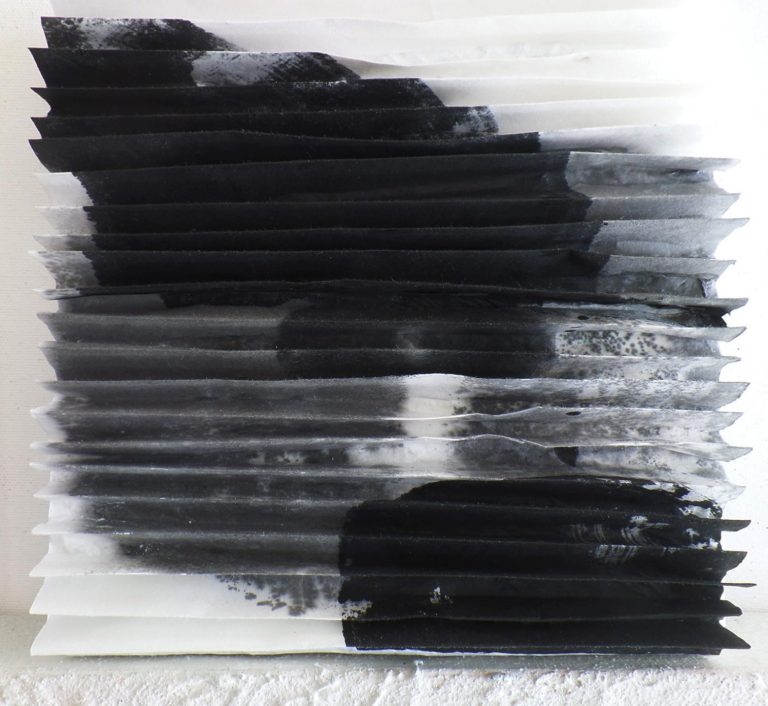
Furthermore, as seen in Kyoto fans, washi is a flexible material and can be folded quite freely. It is less prone to damage even with frequent folding, making it a valuable and long-lasting material.
3D Washi art
Based on these characteristics of washi, I am attempting to create new washi designs, not only for ink paintings but also for other purposes. When unfolded, it resembles an ink painting; when folded, the image is compressed, changing its appearance. By combining blank pieces of washi paper, new three-dimensional works of art can be created. The combination of flat washi paper and ink painting to create new three-dimensional pieces is a delightful discovery.
I am preparing for some 3D sumi-es, uploading within April 2026.
Direct Sales: Sumi-e Gallery
Art under 1000€ Portrait/CV